


The Top 5% of Americans Are Outspending Their Own Paychecks. That's the Risk to Watch.
The Top 5% of Americans Are Outspending Their Own Paychecks. That's the Risk to Watch.

Piero CingariMon, August 17, 2026 at 3:02 PM UTC
0
America’s consumer may be less divided than investors think. But one group is still behaving very differently from everyone else: the richest 5% of households.
Bank of America’s latest data show spending growth has increasingly converged across income groups.
Lower-income households saw card spending rise 5.4% year over year in July, while middle-income households rose 4.9%.
The top 5%, however, remain the outlier.
Their spending continues to grow faster than their wages. That gap is becoming one of the most interesting signals in the U.S. consumer because it suggests something other than paychecks is supporting their purchases.
The likely answer is wealth.
The Stock Market Is Paying For It
Economists at the Bank of America Institute said that the spending resilience among the highest-income households is "likely being driven by the wealth effect from higher equity prices."
The timing is hard to ignore.
The S&P 500 – as tracked by the SPDR S&P 500 ETF Trust(NYSE:SPY) – was up more than 20% year over year in July.
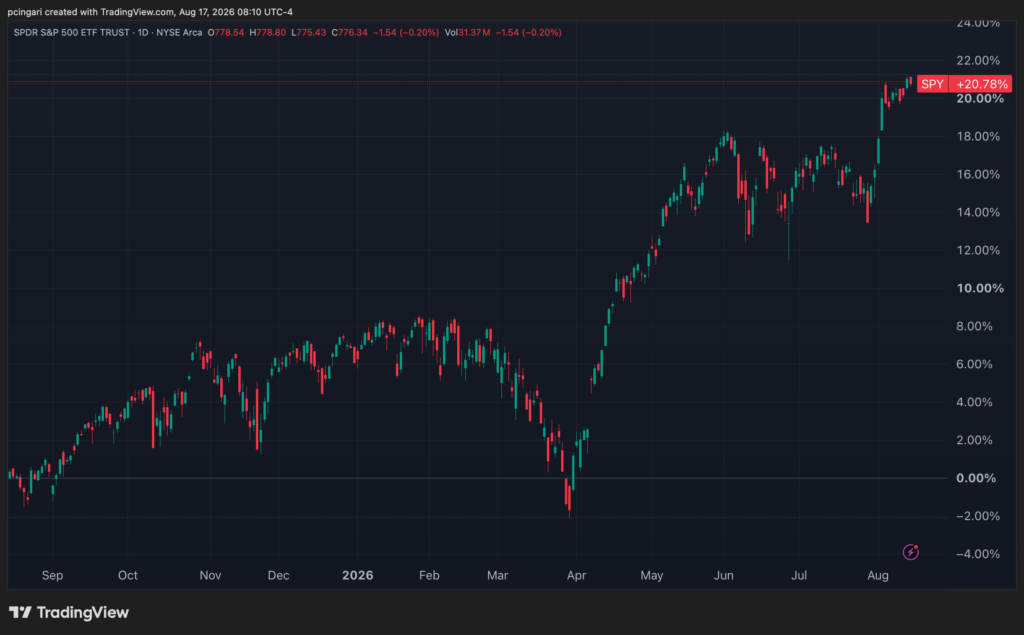
Equity ownership is also heavily concentrated among higher-income households, meaning the market rally has disproportionately increased the wealth of people already holding large investment portfolios.
That creates an important distinction between income and wealth.
A household does not necessarily need a larger paycheck to spend more if its investment portfolio has risen sharply.
A stronger balance sheet can make discretionary purchases feel easier to afford.
“Strong balance sheets and rising asset prices continue to support outsized spending growth for the top 5%,” David Tinsley, economist at the Bank of America Institute wrote in a report.
Wall Street’s Rally Is Turning Wealth Into Consumer Spending
Bank of America’s data shows exactly where this effect appears strongest.
Higher-income households continue to significantly outpace lower-income households in spending on airlines and clothing.
The gap is also visible in lodging and, to a lesser extent, general merchandise and durables.
In other words, the wealth effect is showing up in the categories where consumers have the most flexibility.
But this is not simply a story about rich Americans carrying the entire economy.
Advertisement
The more important development is that the rest of the consumer is catching up.
Lower- and middle-income households have seen stronger after-tax wage growth. In July, after-tax wage growth reached 5.2% for lower-income households and 4.2% for middle-income households.
That has narrowed the gap between what households earn and what they spend.
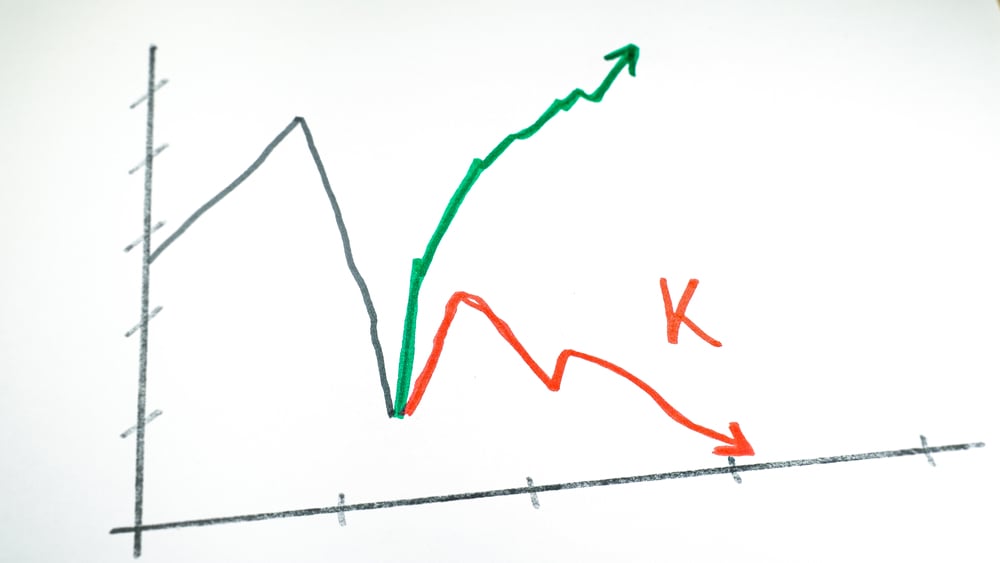
The result is what Bank of America calls the "great convergence": the old K-shaped consumer divide is becoming less pronounced.
Read Also:
The US Treasury Market Hasn't Been This Cheap in Decades: Here's Why
Why Investors Should Care
The consumer, therefore, looks stronger than a simple headline spending number suggests.
Total card spending growth slowed to 5% year over year in July from 6.3% in June.
Yet Bank of America says much of the slowdown reflected temporary factors, including online promotion timing and the fading of World Cup-related spending. Spending, excluding gasoline, still increased by 4.3%.
More importantly, households do not appear to be funding spending through an aggressive savings drawdown. Bank of America says savings and deposits remain elevated, while a larger share of households are paying their credit card balances in full.
That gives the current consumer expansion a stronger foundation.
Still, there is one vulnerability investors should watch.
The top 5% are increasingly relying on wealth rather than wage growth to sustain their spending. If the stock market weakens materially, that support could fade.
For now, however, Wall Street’s rally is doing more than boosting portfolios.
It may be helping keep America’s most affluent consumers spending and that could matter for the broader economy far more than the headline consumer data suggests.
Read Also:
Earnings Volatility Watch: Wolfspeed and 9 Other Stocks Could Swing Up to 17% this Week
Photo: Shutterstock
View more ratings on SPY
"ACTIVE INVESTORS' SECRET WEAPON" Supercharge Your Stock Market Game with the #1 "news & everything else" trading tool: Benzinga Pro - Click here to start Your 14-Day Trial Now!
This article The Top 5% of Americans Are Outspending Their Own Paychecks. That's the Risk to Watch. originally appeared on Benzinga.com
© 2026 Benzinga.com. Benzinga does not provide investment advice. All rights reserved.
Source: “AOL Money”
