


The days of British sprinting falling short are finally over
The days of British sprinting falling short are finally over

Oliver BrownTue, August 18, 2026 at 5:02 AM UTC
0
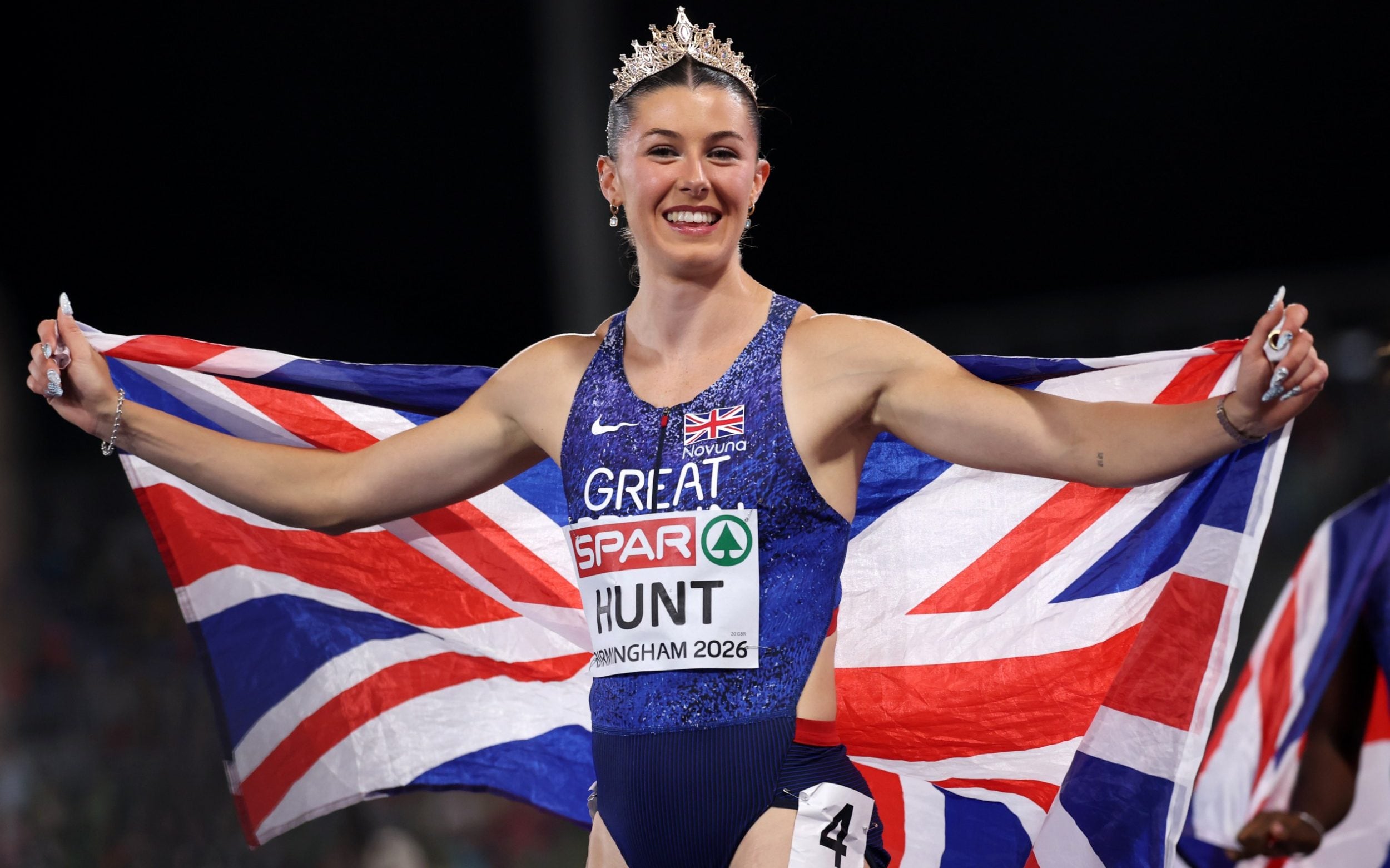
Amy Hunt has the gift, but also brings plenty of gloss to athletics - Julian Finney/Getty Images
Amy Hunt leans so heavily into her own luminous talent that she has her celebrations mentally choreographed before she even crosses the line. Fresh from channelling her inner Russell Crowe to scream “Are you not entertained?”, Gladiator-style, on winning the 200 metres, she bookended a quadruple of European golds with a flourish, mischievously sticking her tongue out and flashing four fingers to mark an unparalleled feat.
Respectful though she was to her 4x100m mixed relay team-mates, she could not resist a moment to herself once Birmingham’s Alexander Stadium had emptied on Sunday night, posting footage of herself dancing down the home straight while miming Abba’s The Winner Takes It All.
You hear it said sometimes that Hunt, somehow able to combine a wondrous sprinting career with an English literature degree at Corpus Christi College, Cambridge, offers an antidote to influencer culture. But the reality is that she has both the gift and the gloss, to the point where she can pursue both a fanatical training regime and a shrewd strategy to capitalise on her sassy, insouciant image. “I’m looking to be iconic,” she said. This might, if uttered by anyone else, have come across as conceit. And yet from Hunt the sentiment was impossible to begrudge, perfectly encapsulating both her vivacity and her awareness that her time as athletics’ alpha female was finite.
The picture of her blowing a kiss to the crowd after victory No 4 looked almost as if it had been set up by Vogue. With a tiara on her head, Union Flag on her shoulders, elegant jewellery on her wrists, and even her fingernails painted to reference Birmingham’s Bull Ring, you half-expected to see a photo credit by Mario Testino. Except this was Hunt in her natural habitat, holding fast to her philosophy of feeling good by looking good. “The glam definitely helps my mentality, because sprinting is such a confidence game,” she explained, en route to becoming the first person to claim four golds at a single European Championships. “It’s a show.” And this was one production where she was the undisputed leading lady.
Advertisement
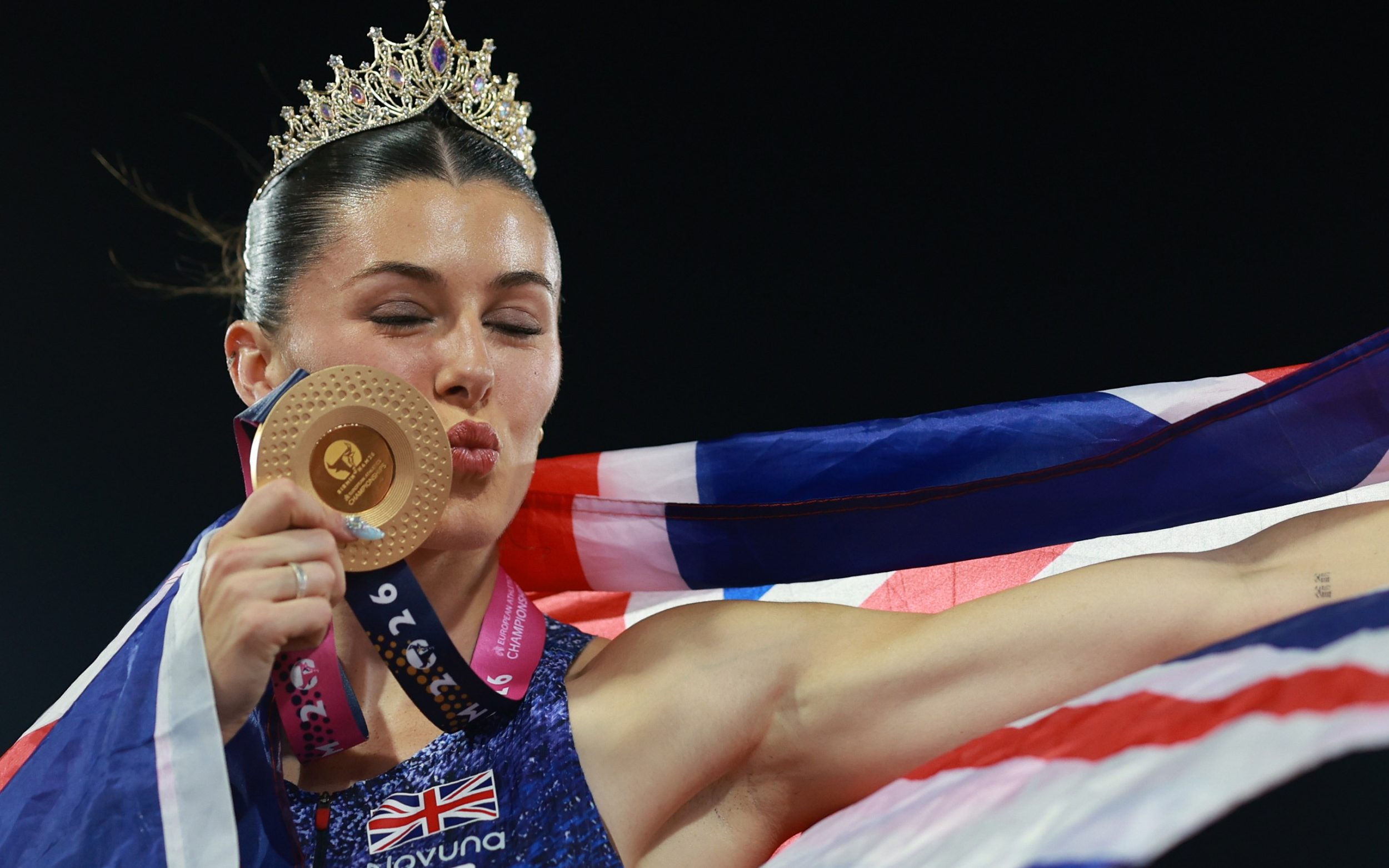
Hunt understands that elite-level athletics is a ‘show’ - Morgan Harlow/AP
In truth, athletics in Britain has seldom enjoyed a moment in the sun quite like it. Despite the deserved criticism of organisers for pricing many fans out of attending, the nightly primetime coverage on BBC One – making a mockery of the corporation’s decision to surrender the Commonwealth Games to TNT Sports – elevated Hunt, Georgia Hunter Bell, Keely Hodgkinson and Dina Asher-Smith to the pedestal they deserved. Outside the Olympics, athletics is so often consigned to the broadcast boondocks, but here Hunt galvanised an entire sport by setting herself the most improbable goal and fulfilling it on home soil. Even at 24, she had the wisdom to sense that was her time and the spirit to savour it while it lasted.
These phases in any athlete’s life are as precious as they are ephemeral. Illness, hamstring tears, freak disqualifications: all can conspire to derail even the most carefully crafted plans. But Hunt courses with such confidence, so comfortable in her self-stated identity as “track goddess and academic badass”, that she seems almost impervious to self-doubt.
The story of British sprinting no longer needs to be one of dropped batons and unfulfilled potential: she and the other three extraordinary young women who have unlocked relay glory each offer singular distinctions. Hunt brings a passion for art and opera, while Imani-Lara Lansiquot has written a play and Success Eduan has juggled her commitments on track with being a student midwife. As for Asher-Smith, she has just established herself as the most decorated athlete in championships history. At a time when there is talk of the country lacking role models, these four alone stand as a refreshing rebuke to cynicism.
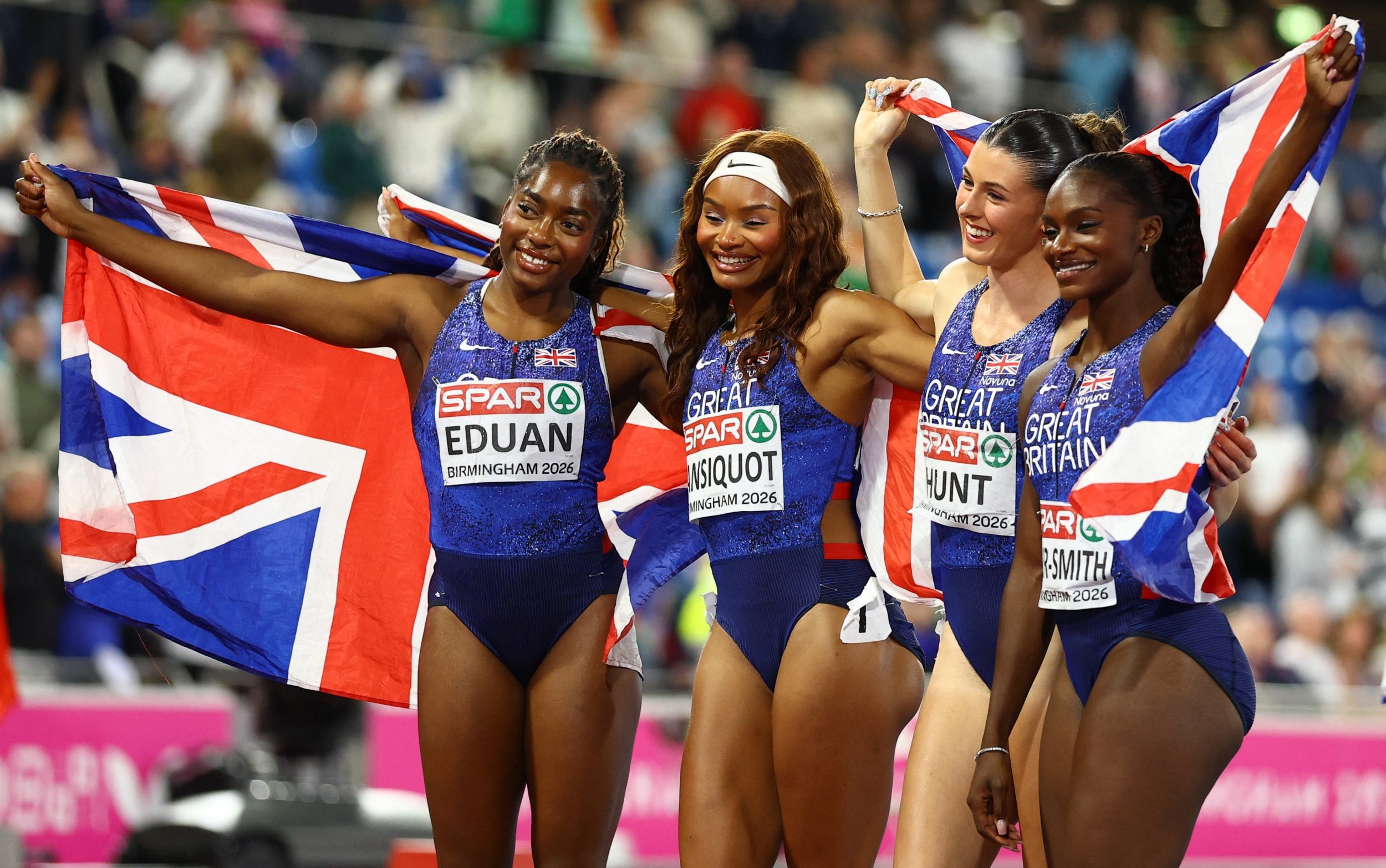
Hunt, together with Dina Asher-Smith, Success Eduan and Imani-Lara Lansiquot have given Britain plenty to be proud of - Reuters/Peter Cziborra
Hunt, who will be 26 – statistically a sprinter’s absolute physical peak – at the Los Angeles Olympics, is an exhilarating figure for the nation to rally behind. While her winning time of 11 seconds flat in the 100m would have placed her only seventh in the final of the 2024 Paris Games, her 200m silver at the World Championships in Tokyo last summer underscored her credentials on the global stage. Her top speed stands comparison with anybody’s, and her start, clearly the one flaw in her armoury given her height, is a weakness she is hell-bent on correcting during a remorseless winter training block.
“Life is short, why not be ambitious?” she asked, rhetorically, as she bathed in the glow of her accomplishment. It is an attitude that defines one of the most thrilling crops of athletes Britain has unearthed. How often do you encounter the self-belief embodied by Josh Kerr, who declares that he will reclaim the mile world record for national pride and delivers exactly that in front of a packed London Stadium? Hunt, with her fashion preoccupations and more esoteric interests in the Italian Renaissance, is a fundamentally different character but blessed with the same faith in her abilities. She is helping, by her own admission, to put the swagger back into athletics. And after so many years of a British inferiority complex, that must surely be a cause worth cherishing.
Source: “AOL Sports”
